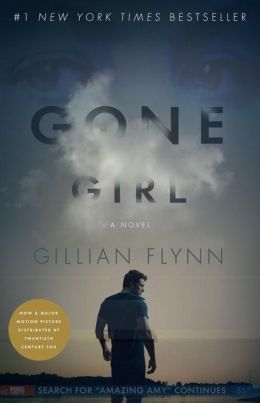
BOOK REVIEW: Gone Girl by Gillian Flynn

you can find the book at:

GoodReads
Amazon
Barnes and Noble
Author Website

my review:

Rating:
★★★★★


“There’s a difference between really loving someone and loving the idea of her.” 


The book begins as Nick – “I used to be a writer…back when people read things on paper, back when anyone cared about what I thought” – finds that at their fifth wedding anniversary his wife Amy has gone missing, the front door is open, the coffee table shattered, books scattered. Amy, a trust fund baby New Yorker who has a disastrous life since Nick put her to his Missouri home to care for his dying mother, is now gone.

Nick calls the police, naturally, but his reaction is strange. He keeps referring to Amy in the past tense and then holding himself back. He is not quite worried enough about her disappearance. “I wasn’t sure what to say now. I raked my memory for the lines. What does the husband say at this point in the movie? Depends on whether he’s guilty or innocent.”

The book switches between Nick’s narrative, as a person who is desperately looking for his wife which Amy consumes the attention of America’s media, and Amy’s diary, as she writes about the early days of their relationship. “Tra and la! I am smiling a big adopted-orphan smile as I write this …I met a boy!” She says. And then later: “He promised to take care of me, and yet I feel afraid.”

Slowly, the two stories begin to converge, the media and police start to swing the blame towards Nick’s way. He lies to the police: little lies that don’t really matter, but why is he doing it? And there’s something strange about Amy’s diary too; her vision of the events of their past is different from Nick’s, it demolishes their perfect image. We begin to see the cracks in the darkness in this seemingly perfect marriage: where is Amy, and who is telling the truth?

Flynn, an extraordinarily good writer, plays her readers with twists in throughout the story. She plays with her unreliable narrators to stunning effect, disturbing and delighting in turn. Gone Girl, her third novel, is an absolute must-read.

I spent most of the book deciding between fearing Amy Dunne and wanting to be best friends with Amy Dunne. The woman is brilliant, witty and utterly on-point about so many things (the “Cool Girl” speech; “bleed and clean,”). Her brilliance is terrifying. Even when it looks like her plans are going to unravel and she’s going to be caught, she finds a new way to win. Amy is always about winning.

I didn’t like Nick at the beginning but now looking back, you’re not supposed to like him then. He’s a bitter loser who drifts through the investigation, shrugging his shoulders at every new clue suggesting he might have a part in his wife’s disappearance. It’s only when he starts to fight back and become more like Amy, crafting his own lies and using the media to his advantage, that you begin to like him.

In short, this book hits all the marks, and I will definitely be reading more from Gillian Flynn in the future.
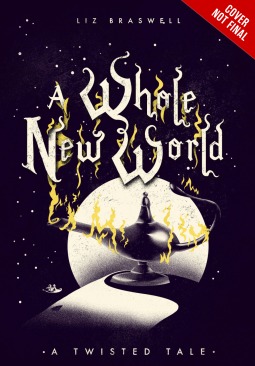
BOOK REVIEW: A Whole New World by Lis Braswell

~ARC provided by Netgalley in exchange for an honest review~

you can find the book at:

GoodReads
Amazon
Barnes and Noble (unavailable at the moment)
Author Website


my review:
Rating: ★★☆☆☆
I had to think about this one and then decide how I was going to write it, but overall – it didn’t live up to it’s potential – mostly because the first 30% was literally a rushed version of the first 30 minutes of the original movie before the original material finally kicked in. The characters – old and new- were underdeveloped and the conflict didn’t emphasise what the actual stakes in the real story were. It had some good moments but, overall, not so good.

This action-packed book had a sufficiently built world, easily visualised, but what was lacking was characterisation. It was fast-paced yet, but I wanted it to be slower. There were also more than a handful of new roles in this story: friends and enemies but they were as flat as a board, leaving me feeling no sympathy for them in their crisis.

In this book, I didn’t really root for anyone apart from Morgiana—a kick-ass, witty female friend of Aladdin. She was my favourite character. Aladdin is supposed to be the charming, “diamond in the rough” street rat – who excels at thieving. Seriously—every time he tries to steal something he gets caught. I suppose it could be for narrative tension/suspense, but it felt sloppy. Jasmine is even worse. She starts off as a self-absorbed princess and doesn’t really lose that. Yes—she’s savvy; she’s a quick learner; she’s reflective—and she has moments where I can see what the author was trying to do – make her into a Katniss-type revolutionary leader. But it didn’t work right.

The relationship between Jasmine and Aladdin irked me so much. Yes, it happens in the film, but in this book, you could replace their name with anyone other YA couple, and it works. The whole romance felt very modern, very contemporary as if they were just two American teens with crushes on each other. It didn’t even sound anywhere near accurate. Even if they’re both orphans and impoverished street rats, I would still imagine that there are cultural customs and traditions in place – behaviour that’s inappropriate between two young, unmarried people.

As like the film, Jafar is our evil villain and even more so in the adaptation, and that REALLY irritated me. He doesn’t seem to have a backstory – there’s no reason why he is the way he is, and ultimately this drives him mad. I get that he’s supposed to be the villain, but again, this just seems to be “the easy way out.” It’s all right to have a good power-hungry dictator as your villain – but when there’s no reason, it just seems simplistic and sloppy.

The ending was typical. There’s a plan – a weak one – and our main characters band together to save the day. Of course. Despite the tension the author attempts to depict, there’s never really any doubt that Jafar’s going to lose and they win. Her best attempt at dramatic tension results in Jasmine being tempted by the dark magic – but luckily she has Aladdin there to draw her back to the light. It all resolves relatively quickly.

What really disappointed me was that this was such a fantastic opportunity to represent the cultural diversity that is so lacking in children’s and YA novels – to tell a Middle Eastern/Arabic tale with accurate cultural customs and beliefs – to show readers something probably unfamiliar to them in an appealing way. Since it’s based on Aladdin, it is already going to attract readers, it was a perfect opportunity to do so.